
What is the Microbiome? An Invisible World Inside and Around Us
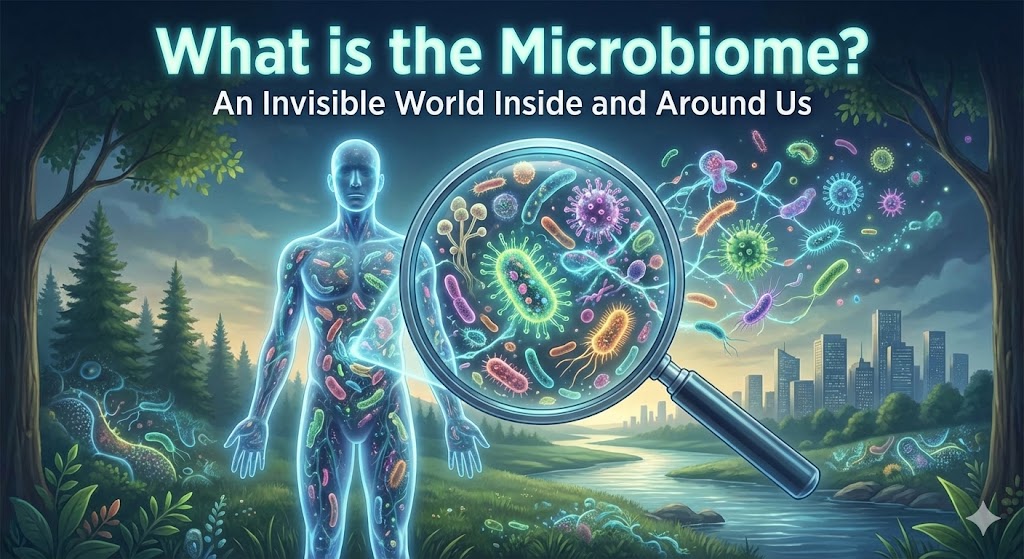
When you look in the mirror, you are looking at much more than just “you.” You are actually looking at a vast and complex ecosystem. While we often think of microbes as enemies to be destroyed, science is revealing that we share our bodies and our planet with trillions of microscopic partners.
This collection of microscopic life is known as the microbiome. But what exactly is it, and why is it so crucial to our existence?
Here is an overview of what the microbiome is, based on information from leading scientific organizations.
Defining the Microbiome
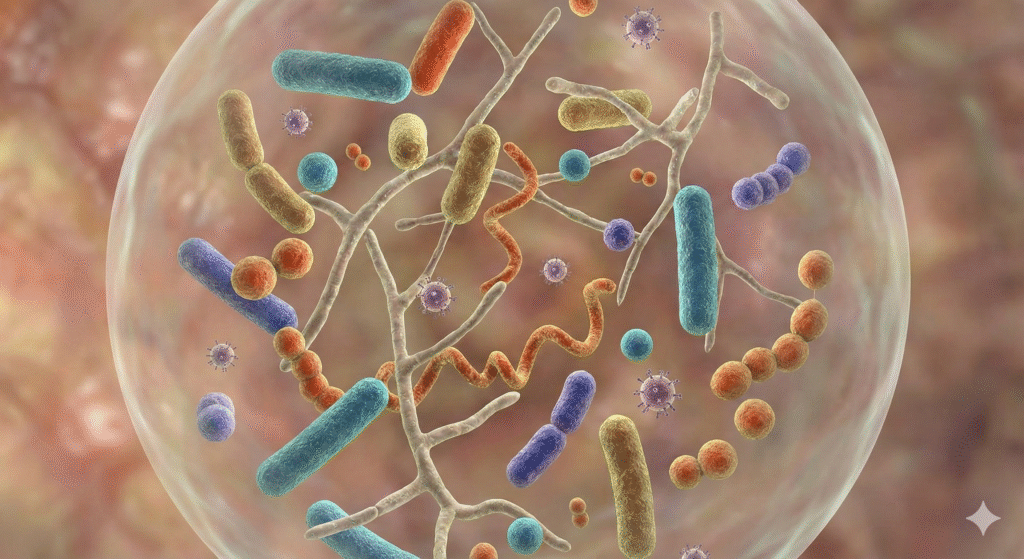
At its simplest level, a microbiome is the community of microorganisms that exists in a particular environment. These communities include bacteria, fungi, viruses, and their genes.
According to the Microbiology Society, it is important to view the microbiome as an ecosystem. Microbes don’t live in isolation but they exist in dynamic and interacting communities. The term “microbiome” refers to the combination of these microbial communities (microbiota) and the specific environment they inhabit.
While we often talk about the human microbiome, these ecosystems exist almost everywhere. The Microbiology Society notes that microbiomes are found in soils, oceans, and the air. They played vital roles in global processes like biodegradation, nutrient cycling, and even carbon storage.
The Human Ecosystem
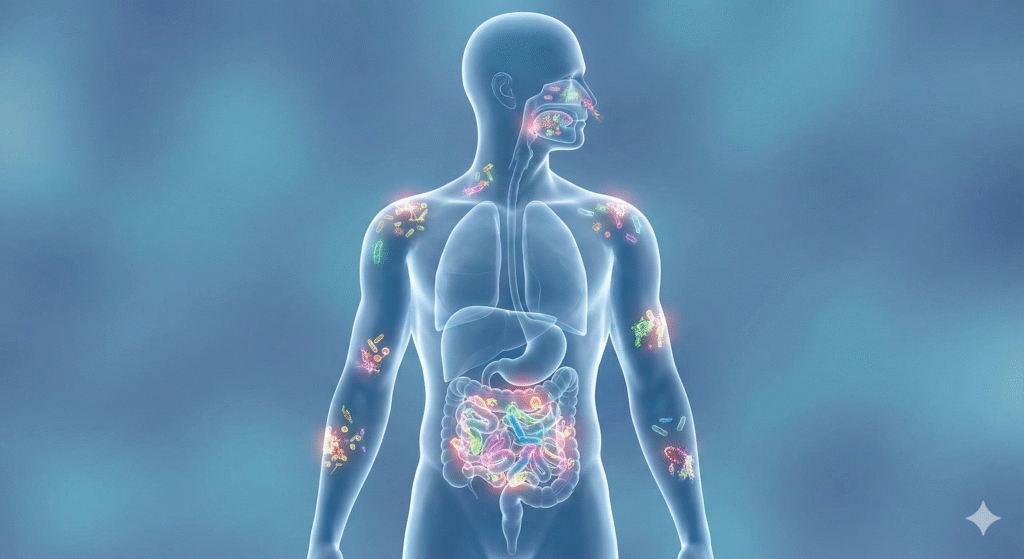
In the context of human biology, the microbiome refers to the microorganisms living on or inside various parts of our bodies, such as the skin, mouth, and gastrointestinal tract.
The National Institute of Environmental Health Sciences (NIEHS) highlights that our core microbiome is established during the first few years of life. These microbes are essential partners in our health. They assist in digesting food to produce energy and are critical for helping our immune systems develop.
Historically, bacteria were often viewed solely as pathogens (disease-causing agents). However, the National Human Genome Research Institute (NHGRI) explains that many of these microbes are “commensal,” meaning they provide benefits. For example, bacteria on the skin help break down lipids to produce natural moisturizing factors.
One of the most critical roles of a healthy microbiome, according to the NHGRI, is providing “colonization resistance.” By occupying available space and using up resources, beneficial microbes effectively crowd out harmful invaders, preventing pathogens from taking hold.
A Dynamic Interface with the Environment
Your microbiome is not static but it is a dynamic entity that changes throughout your life.
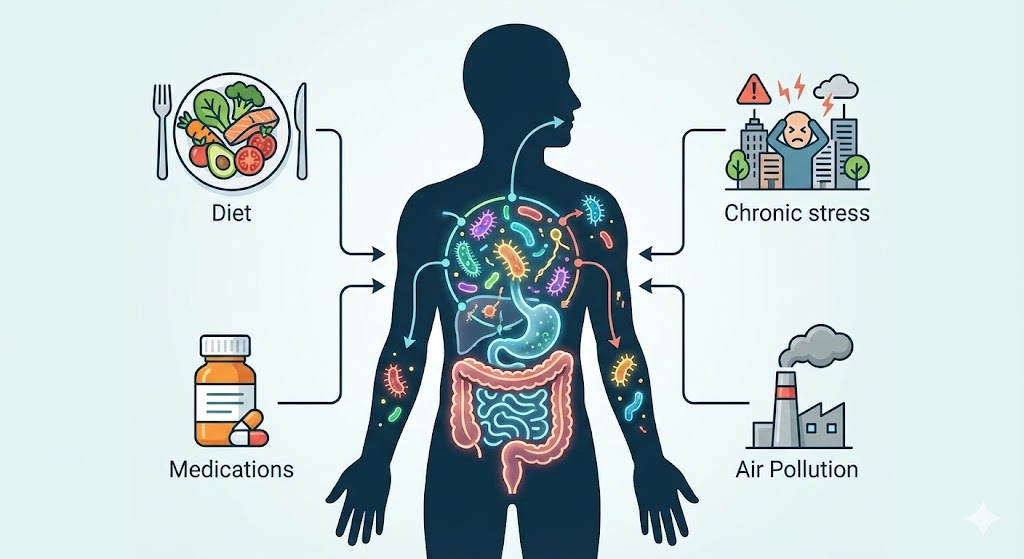
The NIEHS describes the microbiome as a critical “interface” between the body and the external environment. It responds to a host of factors, including:
Diet
Medications (such as antibiotics)
Chronic stress
Environmental exposures like air pollution and certain artificial sweeteners.
Microbes can even interact with environmental substances, sometimes neutralizing toxins, or conversely, making them more harmful.
Why It Matters
Maintaing a balanced microbiome is essential for wellness. When this ecosystem is disrupted, it can have serious health consequences.
Information from the NIEHS indicates that disruptions to the microbiome are linked to various conditions, including obesity, diabetes, cardiovascular disease, inflammatory bowel disease, and even certain neurological disorders.
Understanding these complex microbial communities is a major frontier in science. Microbiologists are currently researching how these systems affect human health, food security, and climate change, hoping to find biotechnological applications that can improve both our health and the health of our planet.
